
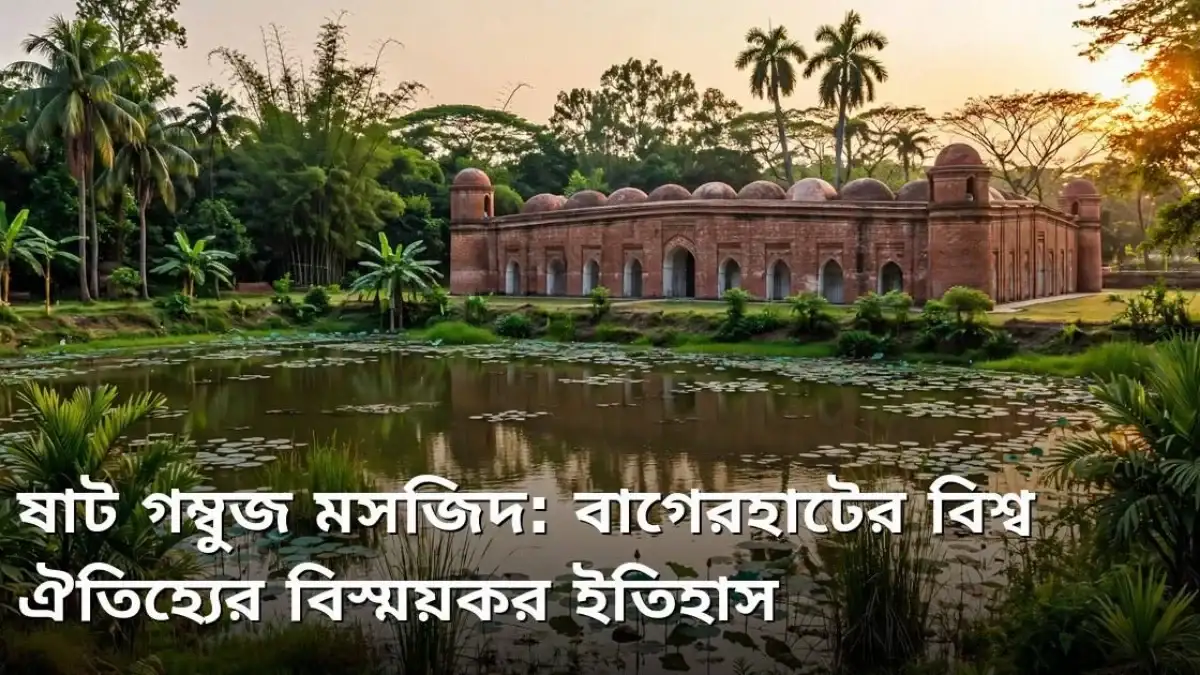
In the southern Bangladeshi town of Bagerhat stands a 600-year-old marvel: the Sixty Dome Mosque (Shat Gombuj Masjid). Judging by the name, you might expect sixty domes, yet the surprising fact is that it actually has more. This vast brick monument is not just a mosque—it is a testament to medieval Bengal's architectural skill and the vision of a remarkable ruler. UNESCO has inscribed this mosque and the surrounding historic city of Bagerhat on its World Heritage List. In this article, we will explore the mystery behind its name, the story of its builder Khan Jahan Ali, its striking architectural features, and why it remains so important today.
The Mystery of the Name: More Than Sixty Domes
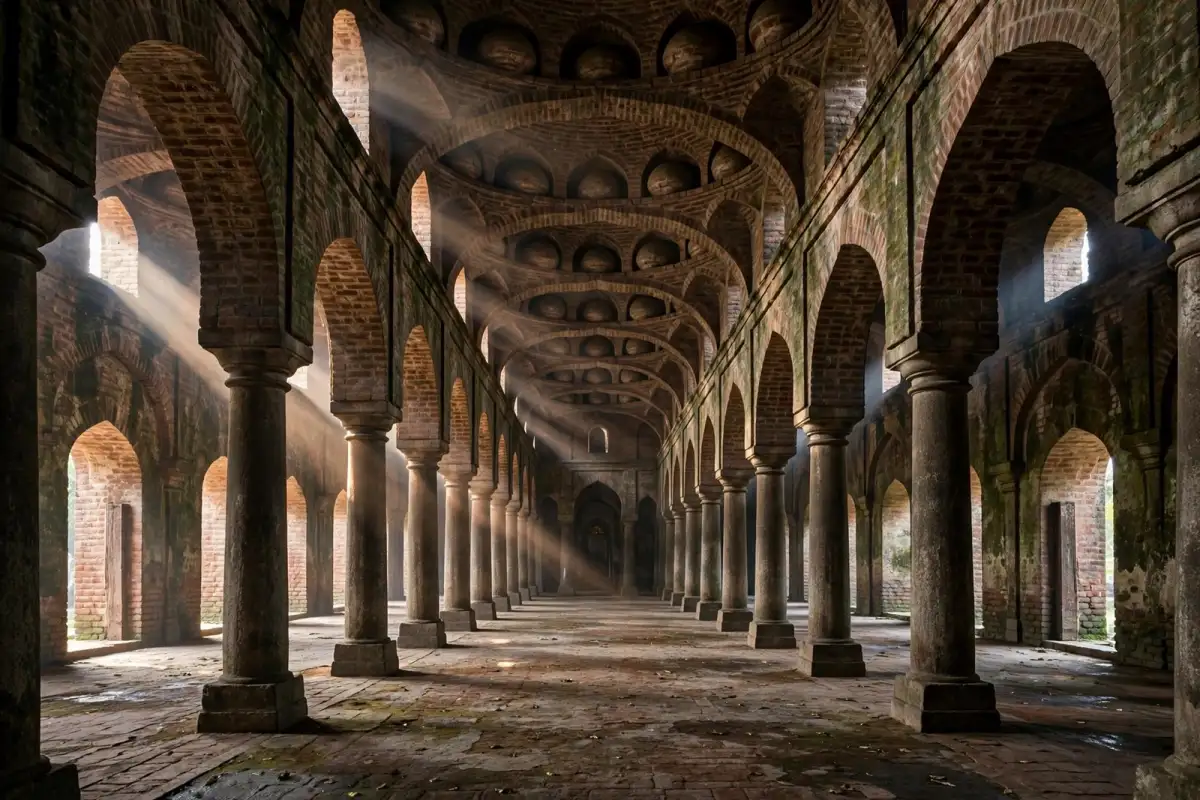
Although it is called the "Sixty Dome" Mosque, counting the roof reveals a total of seventy-seven domes. Historians offer several explanations for how the name came about. One theory is that it comes from the sixty stone pillars inside that support the weight of the entire roof. Another view suggests that in older Bengali usage, the word "shat" (sixty) was sometimes used to mean "many" or "numerous." Others believe the original name simply shifted over time. Whatever the true origin, this discrepancy only adds to the mosque's charm and intrigue. Stepping inside, rows of stone columns topped with arches and crowned by domes immediately awe every visitor. From the outside, its walls—nearly two and a half meters thick—give it the sturdy appearance of a fortress.
- Despite the name, there are actually seventy-seven domes.
- Sixty stone pillars inside support the roof's weight.
- Scholars have several theories about how the name originated.
- Thick walls give the exterior a fortress-like appearance.
Khan Jahan Ali and Fifteenth-Century Bagerhat
The mosque was built by Ulugh Khan Jahan Ali, a fifteenth-century ruler and Sufi saint who established a planned city in this region. He did not stop at building mosques; he constructed roads and excavated large ponds and dighis (reservoirs), turning a dense, forested area into a livable settlement. The freshwater reservoirs he dug still serve local communities today. The mosque is believed to have been built in the mid-fifteenth century, before Khan Jahan Ali's death in 1459. His shrine (mazar) is also located in Bagerhat and remains a place of deep respect for visitors. Together, the monuments and ruins of his planned city form the "Historic Mosque City of Bagerhat," which UNESCO designated as a World Heritage Site in 1985.
- Builder Khan Jahan Ali was both a ruler and a Sufi saint.
- Alongside mosques, he built roads and numerous large reservoirs.
- The mosque is believed to date from the mid-fifteenth century.
- Bagerhat was named a UNESCO World Heritage Site in 1985.
Architectural Marvel: Brick, Arches, and Terracotta
The Sixty Dome Mosque is one of the finest surviving examples of Sultanate-era architecture in Bengal. The main structure is built of brick, while the interior columns are carved from stone. Several domes along the central row are shaped in the chauchala style—curved like the traditional thatched roofs of rural Bengal, translated into brick. Four corner towers resemble minarets, with the front two originally containing staircases leading up to the roof. Terracotta ornamentation on the walls is relatively restrained; the building's beauty lies in its grand scale and dignified simplicity. Along the inner western wall sit multiple mihrabs, with the central one richly decorated in stone carving. The fact that such a massive structure has endured for six centuries speaks volumes about the quality of its craftsmanship. Even today, the mosque is used for daily prayers—it is not merely a museum piece, but a living place of worship.
- Built from a combination of brick walls and stone pillars.
- Several domes follow Bengal's traditional chauchala roof form.
- Four corner towers, with staircases inside the front two.
- The mosque is still actively used for prayers today.
⚠ Visitor Tip: Because this is an active place of worship, dress modestly and maintain silence inside, and avoid walking around as a sightseer during prayer times. Do not photograph worshippers without their permission. Never touch, scratch, or write on the ancient brick walls—preserving this heritage is a shared responsibility.
Final Thoughts: A Proud Heritage and Our Responsibility
The Sixty Dome Mosque is more than an old building; it proves that six hundred years ago, Bengal practiced thoughtful urban planning, advanced engineering, and refined artistry. Built through Khan Jahan Ali's vision and the skill of local artisans, this monument represents Bangladesh on the world stage. If you get the chance, go see it with your own eyes—looking at a photo cannot compare to standing among those rows of pillars and feeling the depth of history. Remember that heritage survives only through the care and respect of visitors; our awareness today ensures future generations can witness this wonder too.
When visiting Bagerhat, do not stop at this mosque alone—explore nearby sites like Khan Jahan Ali's shrine, the Nine Dome Mosque, and the ancient reservoirs. The whole area reads like an open-air history book. Checking local transport options and opening hours beforehand will make your trip smoother. Living lessons of history like this stay in the mind far longer than pages in a textbook.
Another noteworthy feature of the mosque is its setting, built near the old bank of the Ghaghat River and beside the famous Shat Gombuj Dighi. Being close to water was not just for beauty; it served a practical need for worshippers performing ablution and for daily use. In other words, this monument is the product of both spiritual devotion and practical planning. Surrounded by greenery and water, the site still brings a deep sense of calm today.
📱 Join my Telegram channel for more daily tips like this: https://t.me/earnhelosp


Discussion & Comments (0)
No comments on this post yet. Be the first to comment!